
Your suspension is the system of springs, shocks, and control arms that soaks up bumps and keeps your tires planted on the road. The steering ties your wheel to the front tires through a rack, tie rods, and linkage. Every time you hit a pothole or a rough patch on a Yuba City road, those parts take the hit for you instead of your spine. Rubber bushings dry out and crack over time. Ball joints and tie rod ends wear loose from the constant flex. None of this happens overnight, but it adds up mile after mile, and a car that handled tight a few years ago can slowly get sloppier without you noticing the exact day it changed. That slow fade is exactly why suspension and steering problems sneak up on people.
Signs Your Suspension or Steering Needs a Look
- Car pulls to one side on a flat road
- Clunking or knocking over bumps and dips
- Steering wheel shakes at certain speeds
- Car bounces a lot after hitting a pothole
- Uneven tire wear on the edges or in spots
- Steering feels loose or wanders in the lane
You usually notice trouble before you can put a name to it. Maybe the car bounces more than it used to after hitting a dip, taking an extra bounce or two to settle down instead of one smooth absorb. Maybe you hear a clunk crossing railroad tracks or a rough patch of pavement. Some drivers feel the steering wheel shimmy or shake at highway speed. Others notice the car drifting toward the shoulder even though their hands are steady on the wheel and they are not fighting the road. Any one of these is worth getting checked. They rarely fix themselves, and they tend to get louder and more noticeable the longer you wait, which usually means more worn parts by the time you bring it in.
We start by driving the car when we can, so we can feel the specific complaint for ourselves instead of guessing from a description. Then it goes up on the lift, where we check every joint, bushing, and link by hand, pushing and pulling to feel for play that should not be there. We look closely at tie rod ends, ball joints, control arm bushings, and shocks or struts, checking for leaks, cracks, or looseness in the mounts. We also check tire wear patterns across the tread, since uneven wear on the inside or outside edge often points straight at a specific worn part before we even touch a wrench to it.
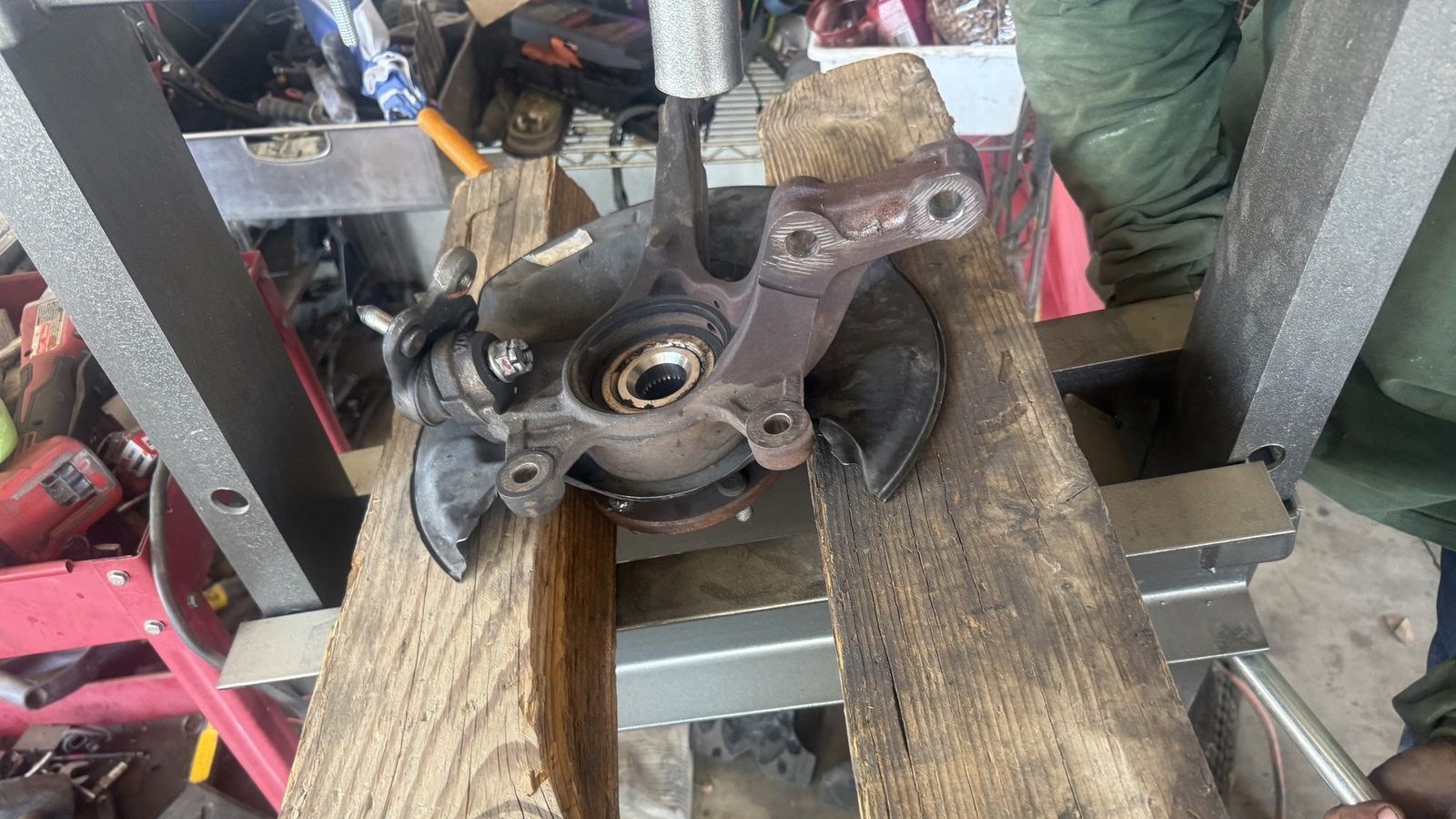

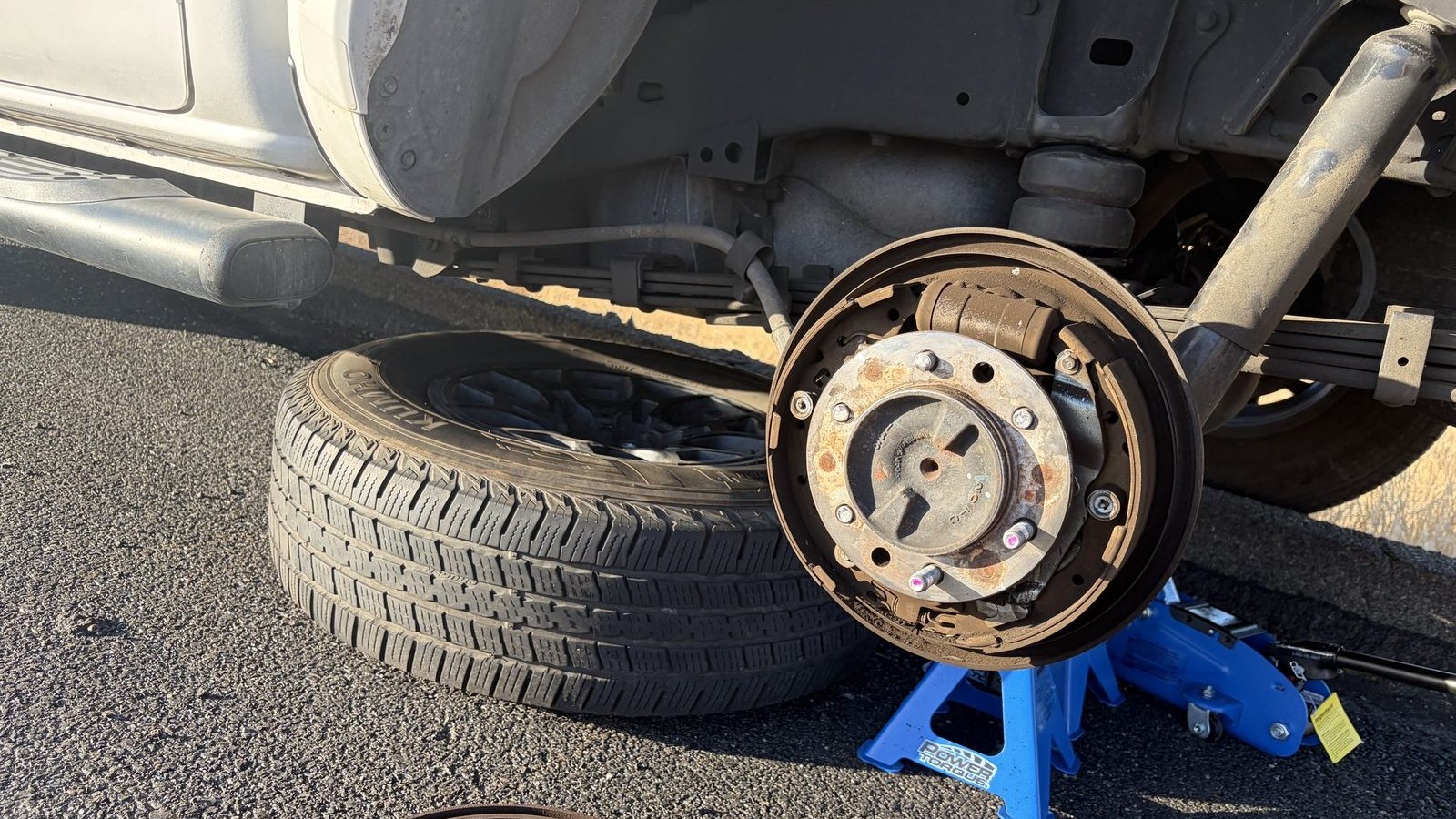
Once we know what is loose, worn, or leaking, we replace just that part when we can, instead of swapping things that are still fine. A worn tie rod end gets replaced and the front end alignment gets reset afterward so the car tracks straight down the road instead of pulling or wandering. A bad strut gets replaced along with its mount if the mount is worn too, since a new strut on a bad mount will not ride right. After any steering or suspension work, we check the alignment, because changing even one part shifts how the wheels sit and point, and skipping that step can leave you with uneven tire wear down the line.
The size of the job depends entirely on what is actually worn when we get it on the lift. One tie rod end on one side is a smaller job than a full set of struts or control arms on both sides of the car. Cars with higher mileage, or ones that spend a lot of time on rough roads around Marysville and Olivehurst, often need more than one part replaced at the same time. That is because suspension parts tend to wear together at a similar rate, since they absorb the same bumps and carry the same load mile after mile, so one worn bushing is often a sign others nearby are not far behind it.
If your steering feels loose, vague, or the car pulls hard to one side without you doing anything, try not to drive it any farther than you absolutely have to. Worn steering parts do not always give you much warning before they fail, and a tie rod or ball joint letting go at speed is not something to gamble on. Keep your speeds down, avoid the highway if you can help it, and get the car looked at as soon as you are able. Catching a worn part early, while it is still just loose and not failed, usually means a smaller job and less risk on the road for you and anyone riding with you.
This kind of wear shows up across our whole service area, not just in one spot. Drivers from Gridley, Biggs, Sutter, Wheatland, and Linda deal with the same potholes, rough shoulders, and seasonal road damage that wears down bushings, joints, and shocks over time. A car driven mostly on smooth city streets wears differently than one that regularly hits gravel roads or rough rural stretches, but eventually the same parts give out either way. Knowing where you usually drive helps us understand what we are likely to find and what to watch closely on your next visit, so the car keeps tracking straight and riding the way it should instead of slowly getting worse.
What to Tell Us When You Call
- Year, make, and model of your car
- What you feel or hear, like a clunk or a pull
- When it happens, like over bumps or at highway speed
- Any recent tire wear or alignment work
 Supercanic