
Your brakes work by turning speed into heat through friction. Every time you press the pedal, pads clamp down on the rotors and slow the wheels down. Do that thousands of times and the pad material wears thin. Once the pad backing wears down to metal, you get that sharp grinding sound, and the rotor starts taking damage right along with it. The system also includes fluid lines and a master cylinder, and those parts can leak or get soft over time, which changes how the pedal feels under your foot. In Yuba City, stop and go driving on Highway 20 and around town puts more wear on pads than a lot of drivers expect. Short trips with constant braking add up faster than highway miles. That means brake service tends to come around sooner here than you might guess from the odometer alone.
Signs You Need Brake Service
- Squealing or grinding when you slow down
- Pedal feels soft or sinks to the floor
- Car pulls to one side when braking
- Steering wheel shakes when you stop
- A burning smell after driving downhill
- Brake warning light staying on
Most drivers notice something is off before the problem turns dangerous. A squeal is usually the built in wear indicator doing its job, a small metal tab designed to rub and make noise once pads get thin. A grinding noise is a step past that, meaning the pads are worn through and metal is contacting metal. A soft or spongy pedal often points to air or moisture that has worked its way into the brake lines, which affects how firm your stop feels. A car that pulls to one side when you brake can mean a stuck caliper or pads wearing unevenly on one wheel. None of these symptoms fix themselves. They tend to get worse the longer you keep driving on them, and waiting usually turns a simple fix into a bigger repair.
Before we replace anything on your car, we check pad thickness across all four wheels and look closely at rotor condition for grooves, heat spots, or warping. We inspect the calipers and lines for leaks or parts that are sticking instead of moving freely. We also check the brake fluid itself, since fluid absorbs moisture over time and that moisture can lower the boiling point and make the pedal feel softer than it should. This inspection tells us whether you need a simple pad swap or whether rotors, calipers, or fluid are part of the job too. We do not guess at what your car needs. We look at the actual parts and base the work on what we find, not on assumptions.
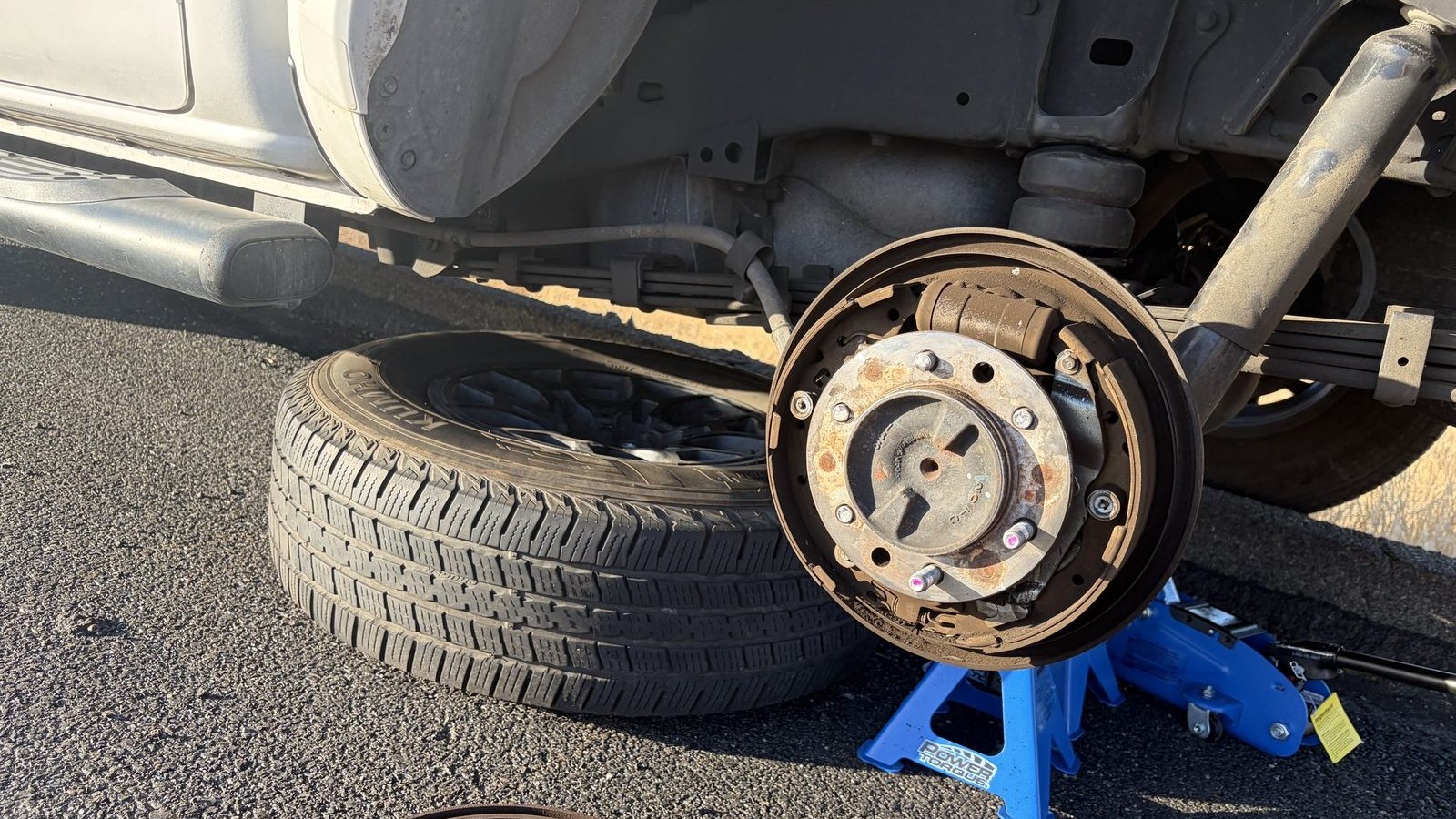

A standard brake service job starts with pulling the wheels so we can get a clear look at everything underneath. We remove the worn pads, then inspect the rotors to decide if they can be resurfaced or need replacing. New pads go in once the rotors are ready. We also clean up the caliper slides so they move freely, since a caliper that sticks will wear one pad faster than the other and cause uneven braking. If the fluid is old or looks contaminated, we flush the system and replace it with fresh fluid. Once everything is reassembled, we test the pedal feel by hand before the car ever leaves the bay, then take it for a short test drive to confirm the stop is solid, straight, and free of noise or pulling to one side.
What changes the size of the job is how far things have progressed before the car comes in. If the rotors are still within a safe thickness, we can resurface them and reuse them with new pads, which keeps the job simpler. If the rotors are grooved, warped, or worn too thin to safely resurface, they need to be replaced instead of reused. A caliper that is seized up or actively leaking fluid adds another piece to the job, since that part has to be addressed before the brakes will work correctly. Fluid that has not been flushed in years may need a full flush rather than a simple top off, since old fluid holds moisture that affects braking performance. Whatever we find, we explain it before doing any extra work beyond the basic service.
If your brakes are squealing but the pedal still feels firm and normal under your foot, you can usually still drive short distances, as long as you drive carefully and avoid hard stops. That squeal is an early warning, not an emergency, but it does mean the clock is running on getting it looked at. If the pedal feels soft, sinks toward the floor, or the car pulls hard to one side when you brake, that is a different situation entirely. Do not keep driving on it. Get the car checked as soon as you can, since those symptoms point to something in the system that has already failed or is close to it, and driving on it longer only increases the risk.
Grinding metal on metal is the one symptom that turns a smaller repair into a much bigger one in a hurry. Once pads wear through completely, the metal backing plate rubs directly against the rotor every time you brake, and that contact cuts grooves into the rotor surface with every stop. A rotor that could have been resurfaced with new pads early on often needs full replacement once it has been ground down this way. The damage does not stay contained either, since a scored rotor transmits vibration back through the caliper and can accelerate wear on the new pads you just installed. Catching the squeal stage instead of the grinding stage is the difference between a straightforward pad and rotor job and a more involved repair. In Yuba City stop and go driving, that window between squeal and grind can close faster than you expect.
What to Tell Us When You Call
- Year, make, and model of your vehicle
- What you hear or feel, like grinding or a soft pedal
- When the noise or feeling started
- Whether the brake warning light is on
 Supercanic